Effective Classroom Strategies That Support Children with ASD
UNIT 3: LET'S GET STARTED...
<img> </img>
Objectives
- Develop appropriate practices that support students with ASD in a classroom environment
Beginning Activities
Things you will need:
- 1 piece of scrap paper
- 1 pen/pencil
Below are multiple visuals of effective strategies used in classrooms for students with ASD. Take a few minutes to look through all the pictures and jot down at least 4 unique things you notice that you believe would benefit students with ASD on a scrap piece of paper. Let's see what YOU can come up with!
<img>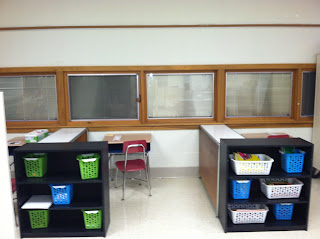 </img> <img>
 </img> <img>
 </img> <img>
 </img> <img>
 </img> <img>
 </img> <img>
 </img>
Compare/Contrast Activity
Below is a link to a virtual tutorial of an actual classroom that is specifically tailored for children with ASD. After watching the short video, using the notes you created from the previous activity, compare and contrast specific classroom strategies that were displayed in the video and your notes. Feel free to jot down notes while you watch the video. I would advise you make a Venn Diagram to organize your thoughts. Good Luck!
Link to tutorial: http://www.youtube.com/watch?v=bEEOxT_O3N4
Effective Classroom Strategies for Students with ASD
Below are a list of effective classroom strategies for students with ASD. Keep in mind that there are many other strategies, you may have discovered some in the previous two activities above. Read through these strategies and see if you learn something new! Feel free to add to your notes!
1. Environmental Considerations: Visual and auditory stimulation in the classroom should be taken into consideration. Individual work stations should be placed away from auditory distractions, visual distractions, and movement.
2. Visual Schedules: Students with ASD perform best when their daily routine is predictable, with clear expectations. Teachers should establish and follow a visual schedule because it eliminates the unexpected and assists students in anticipating and preparing for transitions. Schedules should be visual and kept in the same location.
3. Visual Structure: The classroom environment should be structured visually to help students clearly see and understand what is expected of them. Work stations should be clearly defined. Some teachers suggest using three-sided work stations, while some students may be able to work in more open areas. Taped outlines on the floor, chairs labeled with the student’s name or using furniture to reduce visual and auditory stimulation are great ways to structure a classroom. Stations should also clearly show what needs to be done, how much needs to be done, when the student will be finished, and what’s next.
4. Alternatives to Verbal Communication: Many students with autism have impairments in communication. For those who are non-verbal, a communication system should be in place. The Picture Exchange Communication System (PECS) has been very effective. Voice output communication devices are also a great resource.
5. Direct Instruction of Social Skills: The majority of students with ASD need direct instruction in social skills. Some students do not learn interaction skills by simply being placed in social environments. They need to learn social interaction skills in the same way they learn other academic skills. Using strong visual structure, activities can be designed to teach about identifying emotions in self and others, situations that can cause certain emotions, and how to respond in certain social situations. Social stories have been found to be very useful.
6. Literacy Instruction: Many students with ASD rely on some form of communication which makes literacy instruction is very important. If a student is literate, they will be able to communicate at a much higher level than if the child is forced to depend on communications devices that are programmed with limited vocabulary. Literacy instruction should begin at a very early age and continue throughout all school years. Sometimes outside assistance is needed.
7. Consistency: All students do best when the daily program remains consistent with clear expectations.
8. Sensory Opportunities: Some students with autism have some sensory needs. Some students need time to relax while others find movement works best for them. Sometimes an occupational therapist is helpful if a students has sensory needs.
9. Functional Curriculum: The curriculum should place a strong emphasis on following a functional curriculum because this best benefits students with ASD. Skills that emphasize daily living skills, community skills, recreation and leisure and employment need to be incorporated into the curriculum. Students in inclusive settings can follow the regular curriculum, but emphasis should be placed on those skills that are the most functional.
10. Take advantage of student strengths and interests: Many students with ASD have particular strengths and interests and these should be taken advantage of in the classroom.
Let's Reflect...
1. Identify at least 5 strategies that you could apply in your own classroom that would benefit students' with ASD learning potential.
Additional Resources
If you are interested in learning more classroom strategies, below is a link where you can download a GUIDE to supporting children with ASD in the classroom and the playground! This guide something I would recommend you print out and have handy in your classroom! Be sure to hit the BACK button or open the link in a new tab in order to get back to the course.
K-W-L Chart
Click the link below to jot down what you learned from this unit under the 'L' column of the K-W-L chart! After you have reflected on your learning, continue to the link that says "Conclusion ASD" on the K-W-L chart page.
Link: K-W-L Chart for ASD
Link to: Conclusion ASD