WikiInfoLit Unit 3 Page 2
If you are a professor, a teacher, or a librarian, you are very used to being considered a cognitive authority for your students or patrons. But we're deluding ourselves if we think we can offer our students - and the readers of what we write - the answers, the right answers, all the answers. And we're deluding ourselves if we expect that from anyone else - even innovators, geniuses, and leaders in their fields. So it's our responsibility to pass on this balanced skepticism of cognitive authority onto our own students.
-
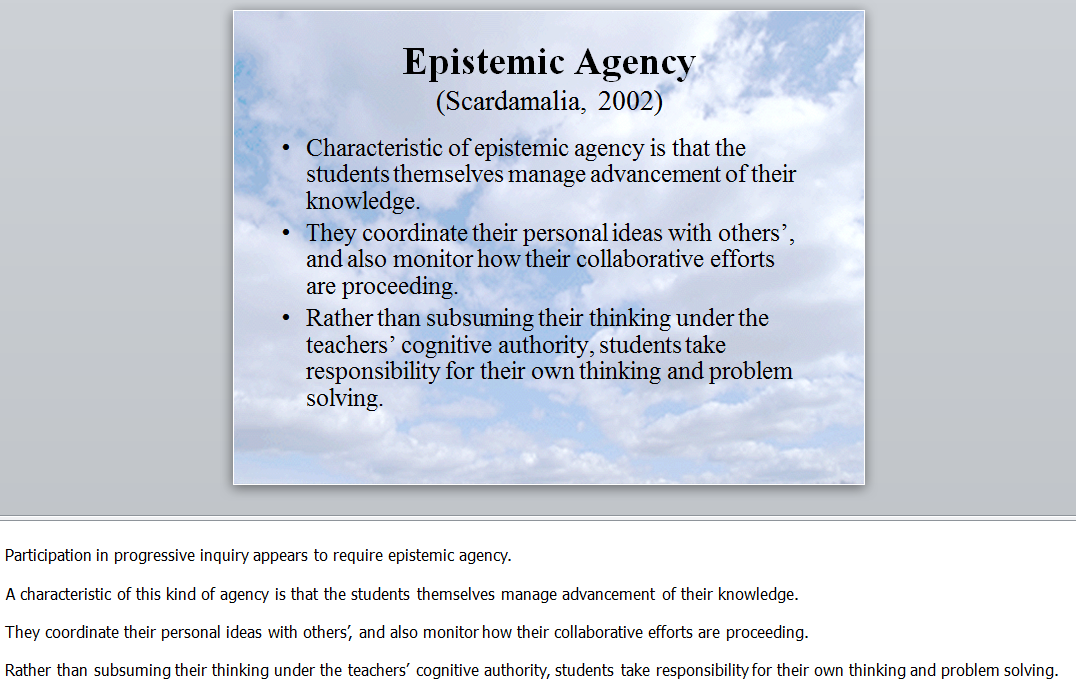 "Epistemic Agency" by Hakkarainen, Palonen, and Paavola. Please click to enlarge, and read.

Many people, despite using Wikipedia frequently in their daily life, trust its information only in a very limited way. One of the biggest reasons for people's reservations about the trustworthiness of Wikipedia information is summed up as, "The information comes from anonymous people on the Internet." Watch this clip from a 2008 on the street survey by SurveyNation: Do You Trust the Information On Wikipedia?.
Far from accepting Wikipedia as authoritative and reliable, most of our students come to us with their skepticism already aroused by the conflicting messages presented by the media. But what our learners are lacking is the ability to articulate justifications for their skepticism, or to evaluate the authority and reliability of information sources for themselves. In other words, they know they should not trust anything completely, but they are at a loss how to tell exactly how trustworthy something is.