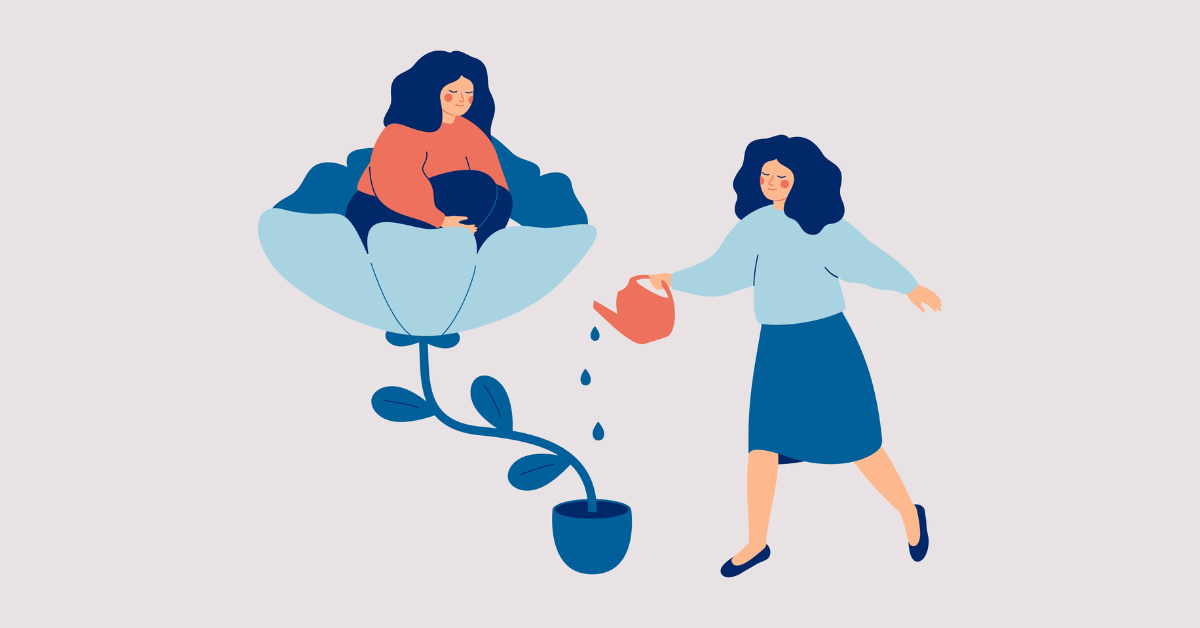
I can identify strategies to implement when responding to passive behavior.
Explore
Recap: Passive behavior can be shown when a child is avoidant. This can be observed in situations of submission since these students do not typically possess strong, dominant personalities. There is also a form of self preservation where they want to avoid painful experiences, rejection, criticism, or ridicule.
The behavior looks like:
shy
avoidant of connections
does not initiate conversations
invisible
easily gives up
negative self-talk
easily frustrated
Explain
Some believe being shy and avoidant is not a behavior. However, any actions that require teacher intervention are behaviors. So how do we support students with passive behaviors?
You want to provide safe adult and peer interactions. This includes protecting them from aggressive students.
This goes back to our first unit when we discussed classroom structure. Keeping high expectations for student behavior will help promote that environment we want them to thrive in.
Provide assertiveness
It is important to communicate with students in a direct, yet honest way. There is no aggressive or controlling tone.However, there are also no soft or enabling responses. A passive or aggressive response to passive behavior does not support it.
Provide positive self-talk
Students learn well from having positive models. Model positive self-talk to support their mindset.
Reward small successes
Even something as small as an acknowledgement for making steps towards a goal is essential for a student with passive behavior. Try to stay away from tangible rewards. We want to support intrinsic motivation. This is a place where you can incorporate positive self-talk.
Withhold criticism
It is easy to mistake direct honesty with criticism. You do not want to criticize this student because that negates the positive self-talk. You want to be honest in their goals and support them on their journey to achieving them.
Apply
Shannon Wright
Your task: Explore scenarios in our google form. Using the knowledge from this lesson, determine how you would respond to each student.
Epstein, M. H. (2008). Reducing behavior problems in the elementary school classroom. National Center for Education Evaluation and Regional Assistance, Institute of Education Sciences, U.S. Dept. of Education.
EAB. (2023). (issue brief). Building A Better Behavior Management Strategy for Students and Teachers. Retrieved 2023
McKinney, A. (2023, July 7). Educator mindsets affect student performance. Teach. Learn. Grow. https://www.nwea.org/blog/2023/educator-mindsets-affect-student-performance/
Vanberbilt University. (2024). How can teachers increase the chances that their students will behave appropriately?. IRIS Center. https://iris.peabody.vanderbilt.edu/module/beh1/cresource/q2/p06/
Manzano, R. J., & Manzano, J. S. (2003, September). (PDF) the key to classroom management. Educational Leadership. https://www.researchgate.net/publication/283749466_The_Key_to_Classroom_Management
Bath, P. (2019, May 4). How I respond to escalating behaviors. YouTube. https://www.youtube.com/watch?v=3f3tAhFWaLE
YouTube. (2012, February 28). Second grade students misbehaving in reading group. YouTube. https://www.youtube.com/watch?v=w4KLmUdczc8&t=5s